
How to Keep Your Dog Safe in Orlando’s Wet Season

How to Keep Your Dog Safe in Orlando’s Wet Season
Orlando’s wet season, which often kicks off in May, brings with it plenty of rain, soaring humidity, and a host of challenges for local dog owners. While those afternoon thunderstorms can cool things down, they also create conditions that can put your dog’s health at risk, from heat stress and skin infections to increased exposure to parasites and the hazards of slippery, muddy yards. At Shey’s Veterinary Hospital, located at 1024 Avalon Park Blvd, Suite 7, Orlando, FL 32828, we know how much your dog means to your family and want to help you navigate the rainy season with confidence. In this guide, you’ll find expert, veterinarian-approved advice on the most common wet-season health risks for Orlando dogs, practical prevention tips, and clear signs that it’s time to schedule a veterinary visit. Whether you’re concerned about muddy paws, pesky mosquitoes, or the effects of humidity on your dog’s skin, our veterinary team is here to ensure your pet has a comfortable, healthy start to summer.
Recognizing Wet Season Risks for Your Dog
As the rains settle in and humidity climbs, dogs in Orlando and surrounding communities encounter some unique health and safety challenges. It’s important to recognize the potential problems early so you can act before they become serious.
Key symptoms to watch for during wet season include increased panting and lethargy, which may indicate heat stress or early heatstroke. You might also notice your dog scratching more than usual, developing red or irritated skin, or showing signs of ear discomfort such as head shaking or odor, as the damp environment can promote bacterial and yeast growth. Additionally, muddy yards and standing water create ideal conditions for parasites like fleas, ticks, and mosquitoes, increasing the risk of heartworm disease, skin infections, and other illnesses.
Slippery surfaces can also lead to minor injuries, and excessive moisture may aggravate arthritis or create hotspots on the skin. If your dog becomes less interested in walks or play during the rain, or you see changes in appetite, energy, or bathroom habits, these could be signs of underlying health issues related to the wet season.
Why Orlando’s Wet Season Poses Special Risks
Orlando’s climate is unique, offering a long wet season with frequent thunderstorms, high humidity, and warm temperatures. These environmental factors combine to create specific health risks for dogs in the region.
Humidity prevents efficient cooling through panting, which is your dog’s primary method of releasing excess body heat. This means that even moderate activity can quickly lead to overheating, especially for breeds with short snouts or thick coats. The warm, moist conditions also make it easier for bacteria and fungi to thrive on your dog’s skin and in their ears. Dogs with floppy ears or skin folds are particularly vulnerable, as moisture can become trapped and lead to infections.
Standing water in yards, parks, and along walking routes provides a breeding ground for mosquitoes, which are notorious for spreading heartworm disease. Puddles and muddy spots can also hide hazards like sharp debris or toxic runoff, and they are an open invitation for dogs to splash, dig, or drink—raising the risk of gastrointestinal upset or exposure to harmful substances.
Finally, the wet ground encourages the growth of mold and fungus, which can trigger allergies or respiratory issues in sensitive dogs. By understanding these risks, you’ll be better prepared to take action and protect your companion.
Managing Common Wet Season Problems
Many wet-season issues can be managed effectively with the right approach and veterinary guidance. Here’s what dog owners in Orlando need to know about tackling the most frequent health concerns during the rainy months.
Skin and Ear Infections
During the wet season, skin infections such as “hot spots” and ear issues like otitis externa become more common. These problems typically present as red, moist, or itchy patches of skin, or as ear redness, odor, and discharge. Treatment for skin and ear infections involves prompt cleaning, topical or oral medications prescribed by your veterinarian, and sometimes changes in grooming routines to keep your dog dry. Our veterinary team will perform a thorough examination, recommend appropriate cleaning solutions, and may prescribe antibiotics, antifungals, or special shampoos if needed.
Parasite Prevention
Fleas, ticks, and mosquitoes multiply rapidly in wet, warm environments. Heartworm prevention is especially crucial in Orlando; untreated heartworm disease can be life-threatening. Our veterinarians recommend year-round parasite prevention, which can include monthly oral or topical medications and regular heartworm testing. If you’re unsure about your current prevention plan or need advice on the best products for your dog, we encourage you to review our preventative medicine recommendations or ask about prescription options during your next visit.
Heat Stress and Overheating
Even when it’s raining, the combination of high humidity and warm temperatures can put your dog at risk for overheating. Our team advises dog owners to limit outdoor activities to cooler parts of the day, provide plenty of fresh water, and use shaded or air-conditioned areas whenever possible. If your dog shows signs of heavy panting, drooling, weakness, or confusion, immediate cooling and veterinary attention may be necessary.
Wet Weather Injuries
Slippery patios, tile floors, and muddy grass can increase the chance of sprains, strains, or minor injuries. Keep an eye out for limping, reluctance to move, or sudden changes in mobility, and reach out to your veterinarian if you notice these signs.
Home Care: Keeping Your Dog Comfortable and Safe
Proactive home care can go a long way in minimizing wet-season risks for your dog. To keep your companion healthy and happy, consider the following tips.
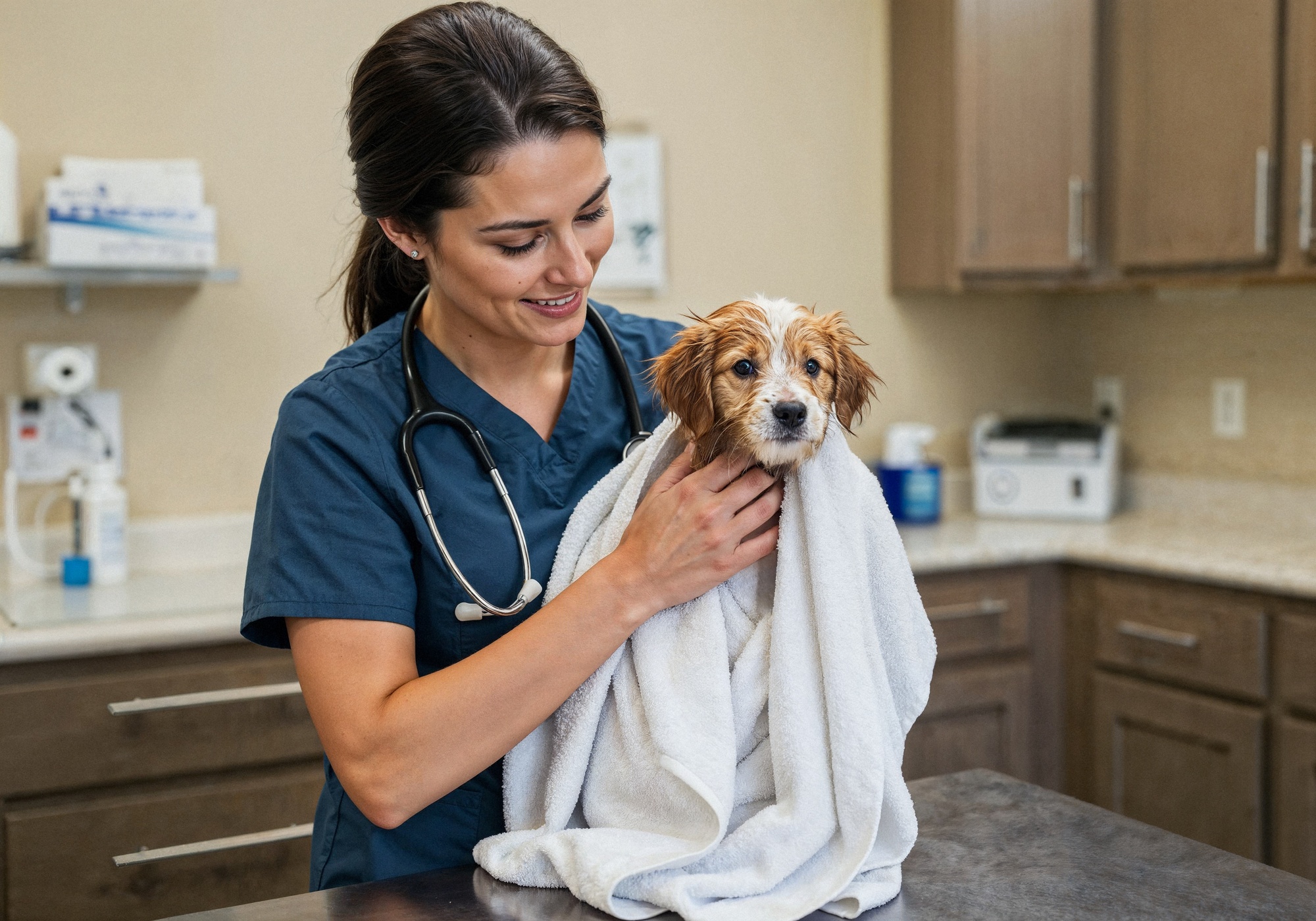
After every walk or trip outside, dry your dog thoroughly with a clean towel, focusing on their paws, belly, and any skin folds. This helps prevent moisture from lingering and reduces the risk of skin infections. Clean your dog’s ears regularly with veterinarian-approved solutions, especially if they have floppy ears or spend time playing in the rain.
Maintain your dog’s grooming routine by brushing out wet or matted fur and scheduling regular baths with appropriate shampoos. Monitor your yard for standing water and eliminate it whenever possible to reduce mosquito breeding grounds. If your dog loves to splash in puddles, discourage drinking from them, as standing water can harbor bacteria, parasites, and toxic substances.
Parasite prevention should remain a top priority during the wet season. Administer prescribed flea, tick, and heartworm medications as directed, and contact our team if you need assistance selecting the right products. For added peace of mind, consider microchipping your dog to improve the chances of a safe return if your pet gets lost during a storm or while seeking shelter.
Always provide a dry, comfortable indoor space for your dog to rest. If your home tends to stay humid, using a dehumidifier can help reduce mold and moisture that may affect your dog’s skin or lungs. On stormy days, offer enrichment activities indoors to keep your dog active and prevent boredom.
When to Schedule a Veterinary Visit
While many wet-season problems can be managed at home, some situations call for prompt veterinary attention. If your dog develops persistent scratching, red or oozing skin, ear discharge, or a foul odor, it’s time to schedule an exam. Sudden changes in energy, appetite, or bathroom habits can be signs of illness that require immediate assessment.
If you notice signs of heat stress such as excessive panting, drooling, confusion, or collapse, move your dog to a cool area and contact your veterinarian right away. Dogs with underlying health conditions, such as heart disease or allergies, may be more sensitive to wet-season challenges and benefit from more frequent check-ins.
Our veterinarians at Shey’s Veterinary Hospital are experienced in diagnosing and treating all types of wet-season ailments. We offer vaccination services to protect your dog from region-specific diseases and can recommend tailored prevention plans for your unique situation. If you’re ever unsure whether your dog needs professional care, do not hesitate to reach out; it’s always better to err on the side of caution when it comes to your companion’s health.
Supporting Your Dog’s Health All Season Long
Orlando’s wet season presents a range of health challenges for dogs, but with the right knowledge and support, you can help your pet enjoy a safe and happy summer. By staying alert to warning signs, maintaining consistent parasite prevention, and keeping your dog clean and comfortable, you’ll reduce the risk of common wet-season problems. Remember to schedule regular checkups and stay up to date with your dog’s vaccinations and heartworm prevention.
If you have questions about your dog’s health or need guidance on any wet-season concern, our team at Shey’s Veterinary Hospital is ready to help. You can find us at 1024 Avalon Park Blvd, Suite 7, Orlando, FL 32828. We encourage you to call us at (321) 234-3188 to schedule an appointment and discuss how we can support your dog’s wellbeing during Orlando’s humid, rainy weather.
When searching for a veterinarian near me, remember that choosing a local, compassionate veterinary team makes all the difference. At Shey’s Veterinary Hospital, we are dedicated to providing the highest-quality care for your dog, no matter the season. Visit our website at sheysvet.com or reach out to our friendly staff today; your dog’s health and comfort are always our top priorities.